I. How the platform works
Chain ESG is a shared industry platform for supply-chain ESG questionnaires. It is not a public data dump. Join openly, build your own chain, bind a real relationship, share only with authorization, complete once, and let several chain owners read the same record.
Any company can join as a chain owner, a supplier, or both. Data stays private unless you choose to publish it. Sharing follows a real supply-chain connection: the supplier authorizes, the chain owner can view.
II. How supply-chain relationships are created
1. Free to join; you choose your role
After you register, you can act as a chain owner, a supplier, or both — managing your own suppliers upstream and connecting to other chain owners downstream. Each company gets an invitation link and QR code to invite suppliers.
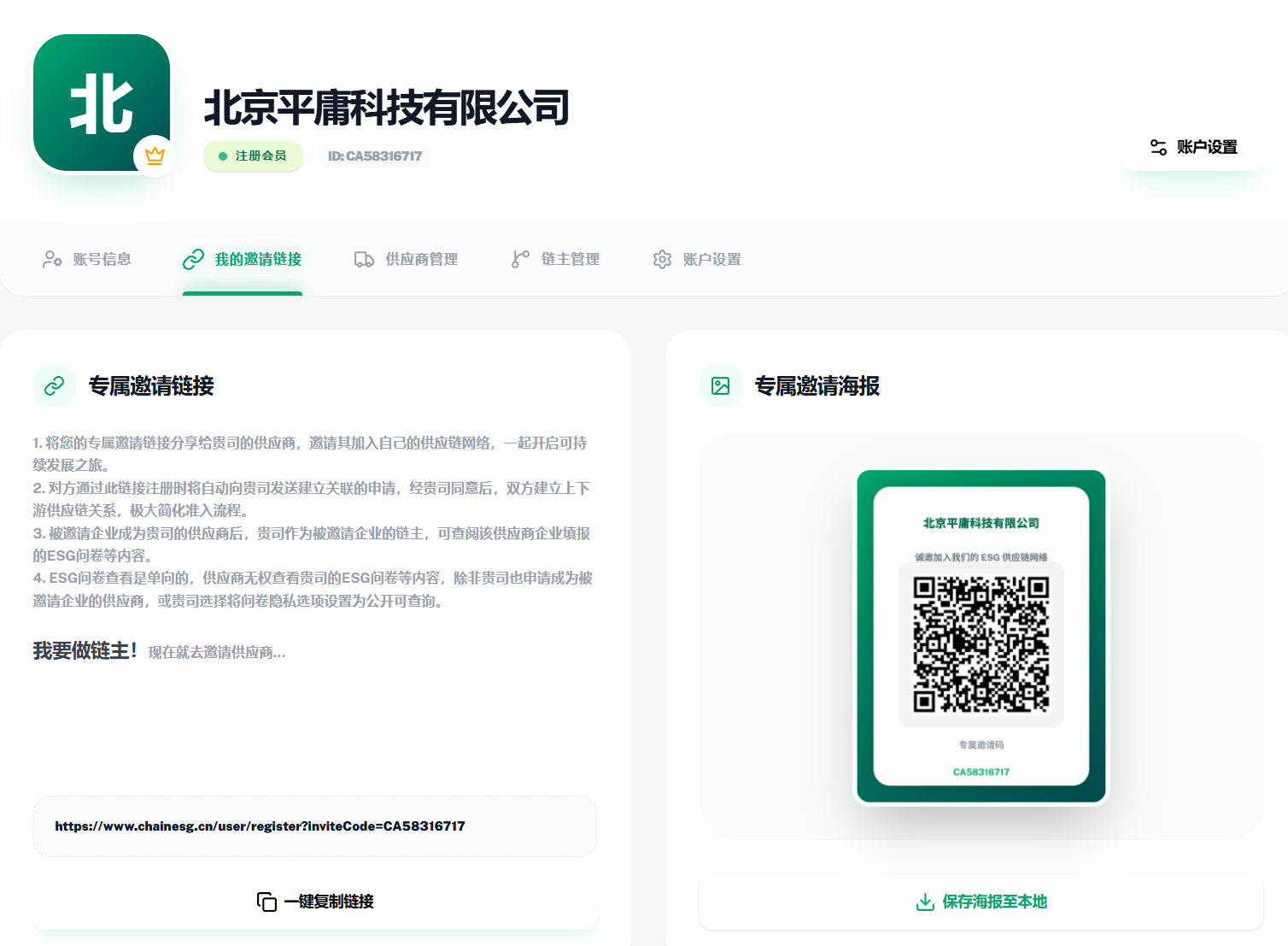
2. The chain owner starts the connection
Chain owners can invite suppliers in two ways:
(1) Send your invitation link. After the supplier signs in, the system asks them to request a connection. You approve or reject it. Approval creates the relationship.
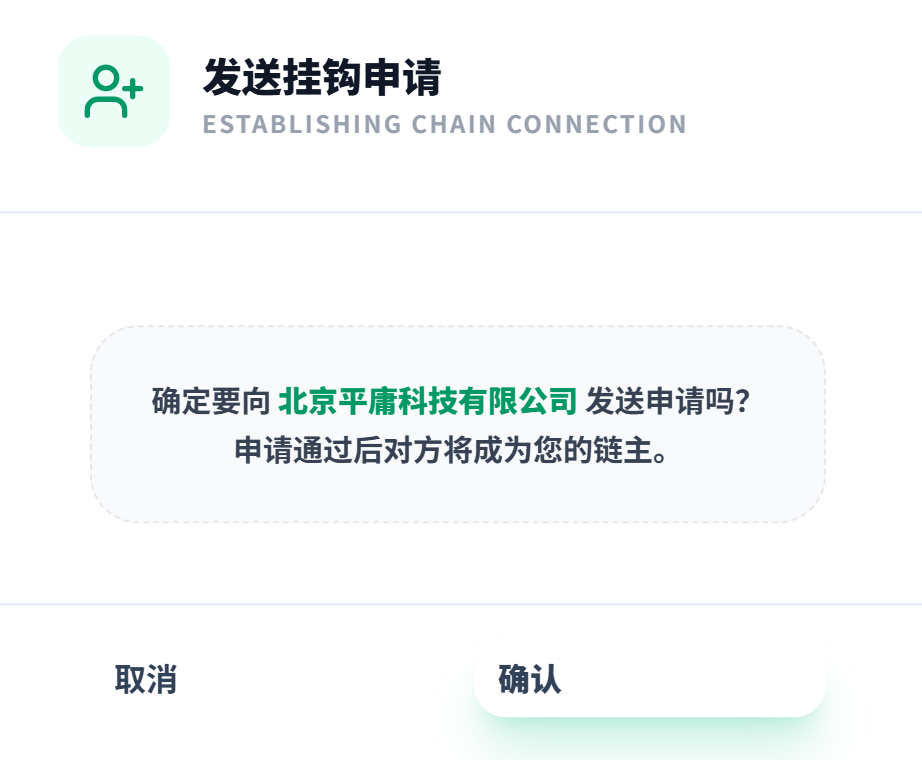
When a supplier requests a connection, you see it immediately. Agree to Join creates the relationship. Reject leaves you unconnected.
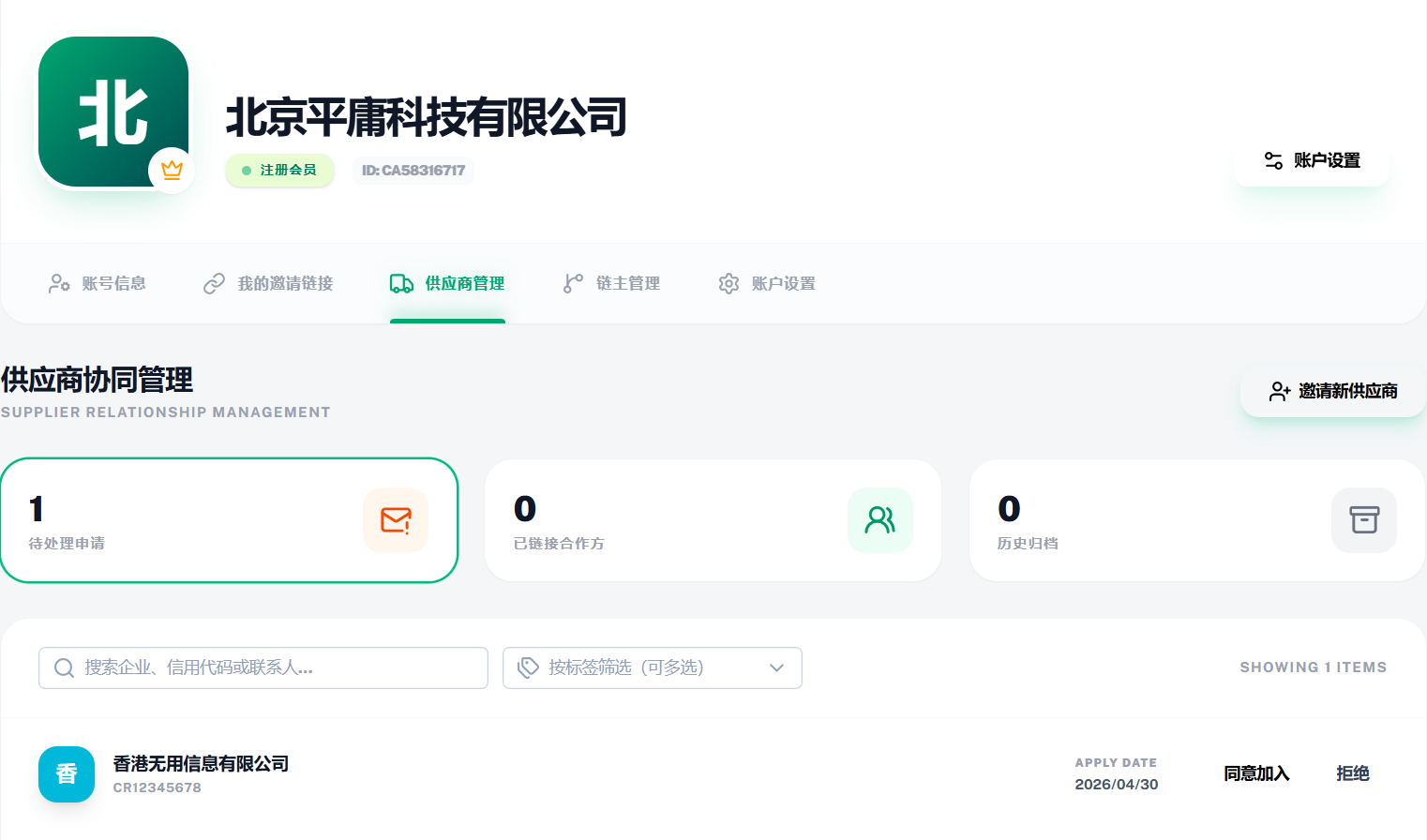
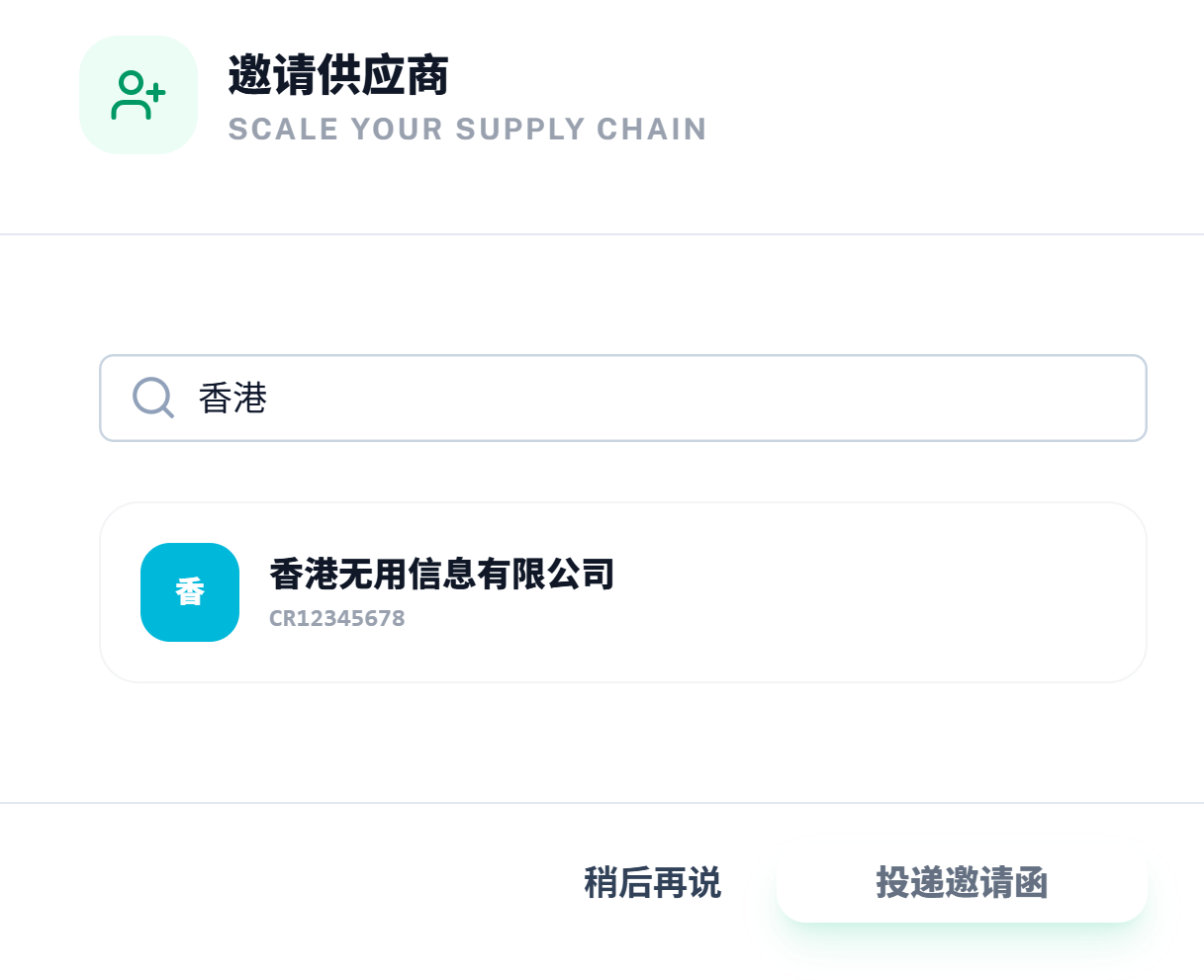
(2) In Profile > Supplier Management, click Invite New Supplier, search, and send an invitation. The relationship starts when the supplier accepts.
3. The supplier can also start the connection
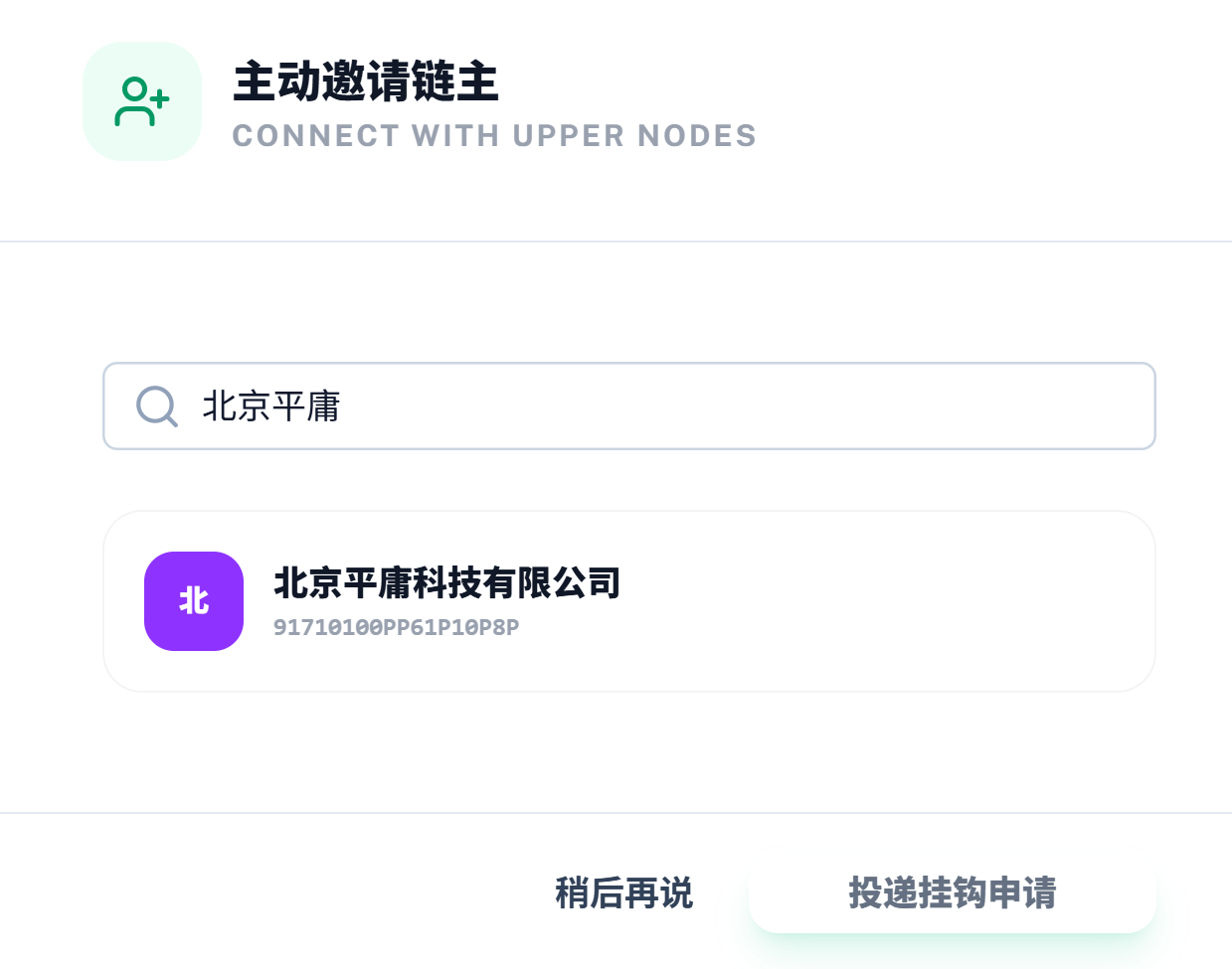
Suppliers can use a chain owner's invitation link, or go to Profile > Chain Owner Management, click Invite Chain Owner to Connect, search, and send a request. The relationship starts when the chain owner accepts.
4. Many-to-many chains
- One chain owner can connect with multiple suppliers
- One supplier can simultaneously connect with multiple chain owners
One chain owner can connect to many suppliers. One supplier can connect to many chain owners. Each relationship is managed on its own.
5. Connect, disconnect, reconnect
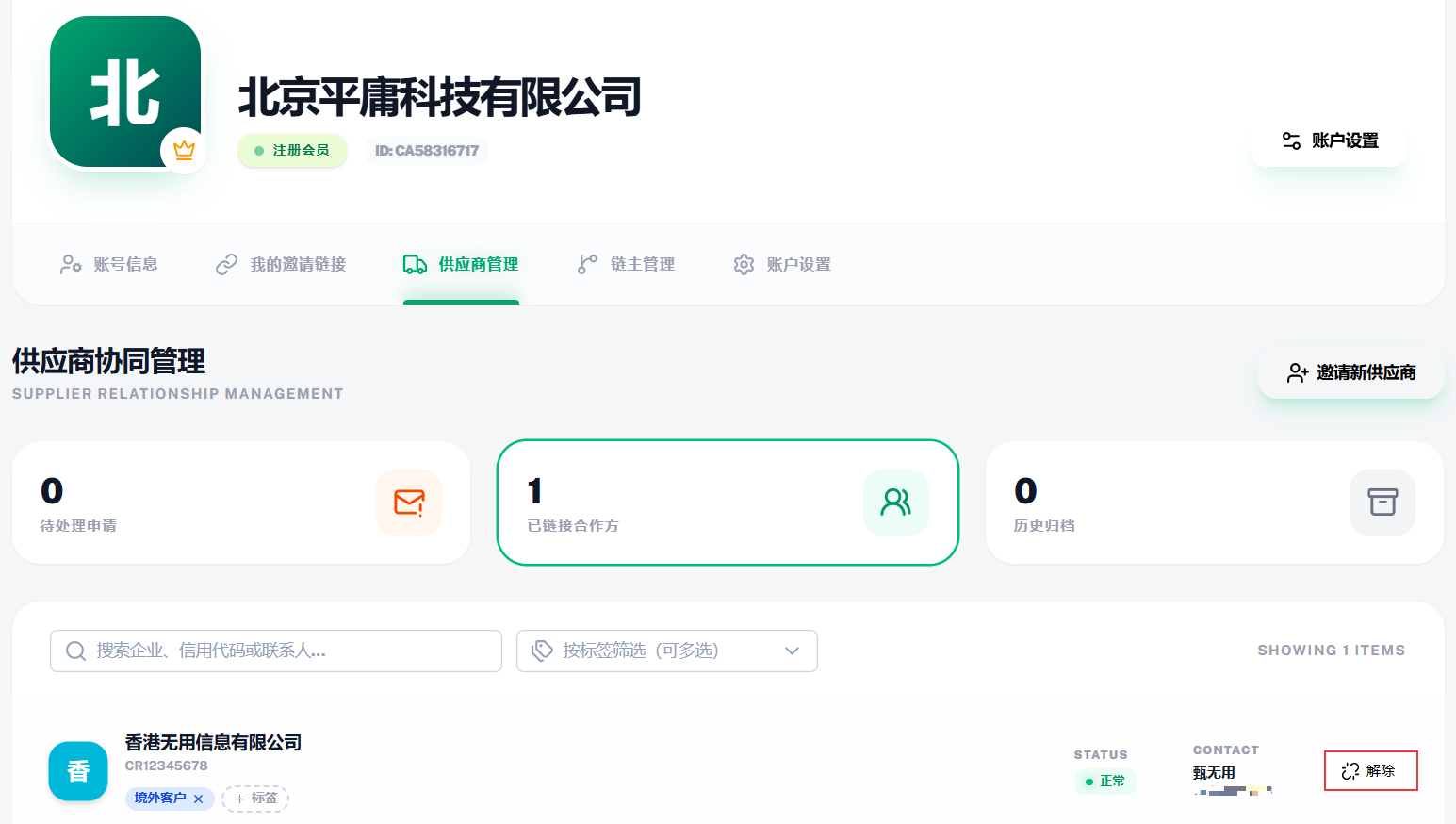
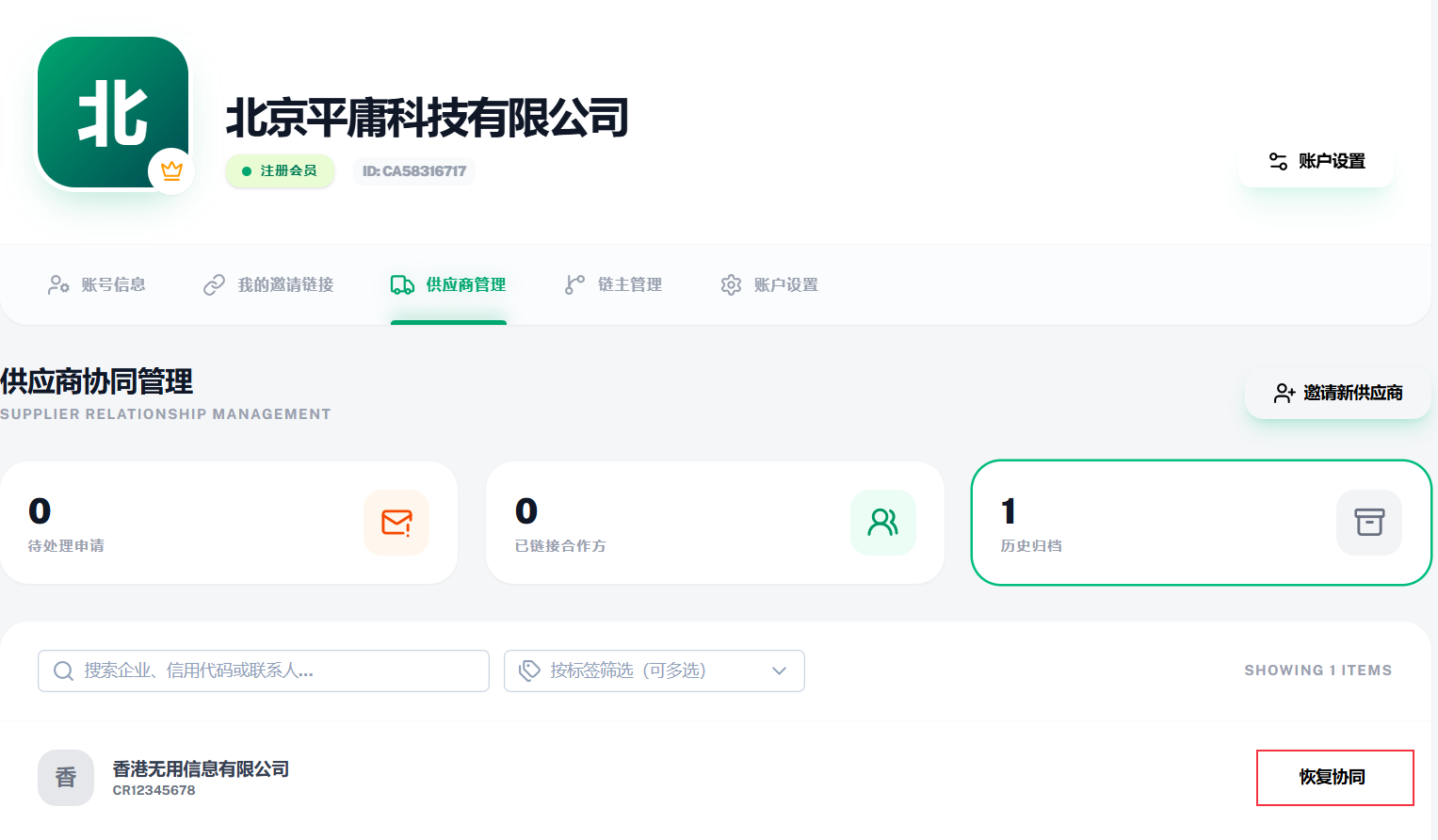
Either party can maintain the directory during the relationship. Either party can disconnect; it takes effect immediately and is logged. After disconnect, the record is archived. Either party can ask to reconnect; both must confirm.
(1) Disconnect whenever the commercial relationship ends
(2) If you work together again, restore the link from history
III. How ESG Questionnaires Work
1. Suppliers Complete Once
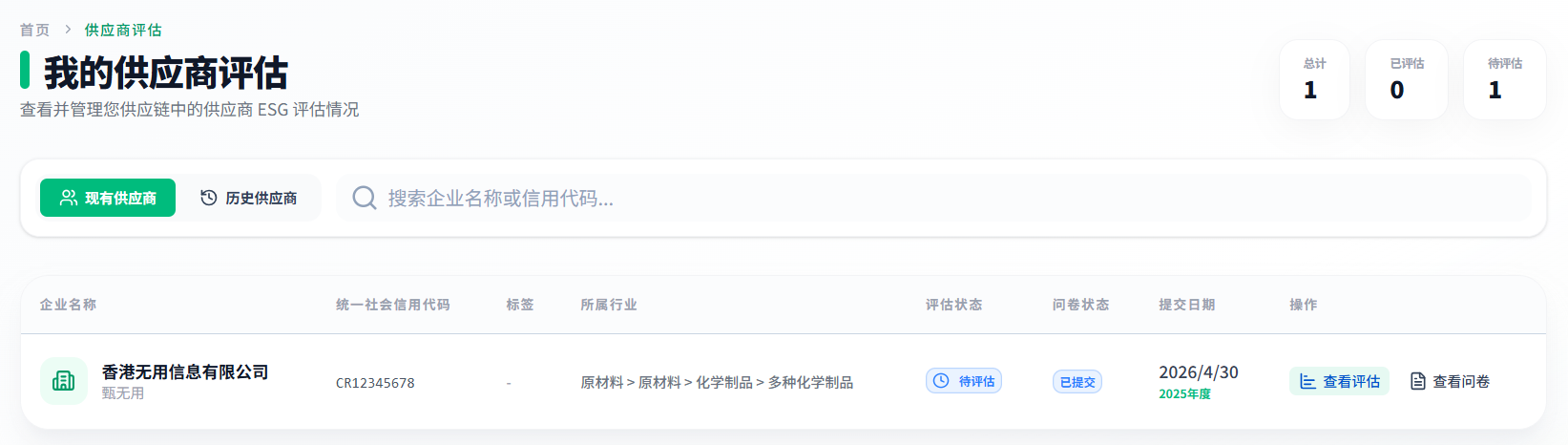
Suppliers complete one standard ESG questionnaire on the platform and keep it updated. They do not need to fill out a separate form for every chain owner they work with.
2. One template; updates sync
Suppliers keep one standard ESG questionnaire. When they update it, connected chain owners see the new version. No separate form per buyer.
IV. Who can see the data
1. No relationship, no access
Without a supply-chain connection, a company cannot view, search, or obtain another company's ESG questionnaire.
2. With a relationship, visibility is one-way
After you connect, the chain owner can view the supplier's ESG questionnaire. The supplier cannot view the chain owner's questionnaire, unless each is also a supplier to the other.
3. One questionnaire, several chain owners
The supplier completes one questionnaire. Every connected chain owner sees the same version. When the supplier updates it, all of them see the update.
4. Ownership and privacy
The supplier owns the ESG data. The platform routes access; it does not republish data on its own. Chain owners can read it. They cannot edit it or bulk-redistribute it.
5. Disconnect, and access ends
When the relationship ends, that chain owner loses access to the supplier's questionnaire immediately. Access follows the relationship.
- (1) As a supplier: manage connections in Profile > Chain Owner Management
- (2) As a chain owner: manage connections in Profile > Supplier Management
Either party can connect or disconnect at any time.
VI. Operating principles
1. Authenticity Principle
Register with a real business license. Connections should reflect a real supply-chain relationship.
2. Self-Authorization Principle
Sharing starts only after the supplier authorizes and the relationship is bound. You choose which chain owners can see the questionnaire.
3. Compliance Principle
Data handling follows applicable security and privacy law. Questionnaire data stays within authorized relationships.
4. Public Sharing Principle
There is no membership barrier to join. The network is meant to be shared, not locked to one buyer.